 should i?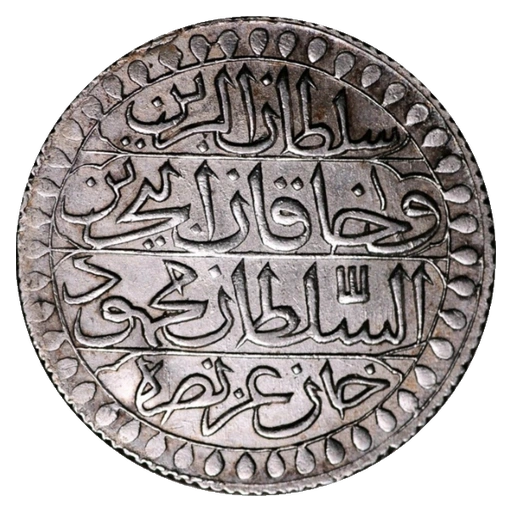
Historical · Algeria
1823 Algiers 2 budju
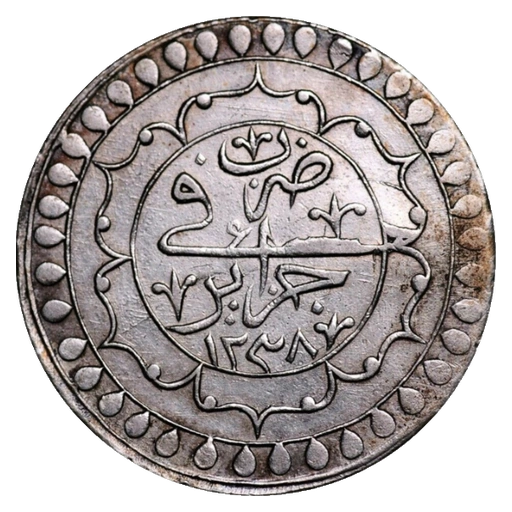
Flowing inscriptions fill both faces within decorative borders. A two-budju coin attributed to Ottoman-era Algiers under Mahmud II.
Flip this coin →Free to flip. Two sides. Equal chances.
The story behind the coin
The source identifies this paired specimen as a two-budju coin of Ottoman Algeria dated 1823, under Mahmud II. Unlike portrait coins, both sides rely on calligraphic inscriptions and ornamental borders. We preserve the source attribution without inventing a word-for-word transcription of the worn inscriptions. Heads and Tails here distinguish the two photographed faces.
Which side is heads?
- Heads
- Several horizontal lines of calligraphy inside a border of oval ornaments.
- Tails
- Calligraphy inside a scalloped inner border and an outer ring of oval ornaments.
A different coin. The same fair toss.
The artwork changes, but every virtual toss still has a 50/50 chance of heads or tails. We simulate the movement; the result is chosen independently. This is not a simulation of the physical balance of a historical coin.
Windrain, via Wikimedia Commons. CC BY-SA 4.0. Both faces cropped from one real paired photograph, background removed and resized. Adapted images remain under CC BY-SA 4.0. Image license ↗ View source record ↗